ABOUT ME & MY RESULTS > MY RESUME > TAKING CHARGE OF CHANGE
Taking Charge of Change
Prosci
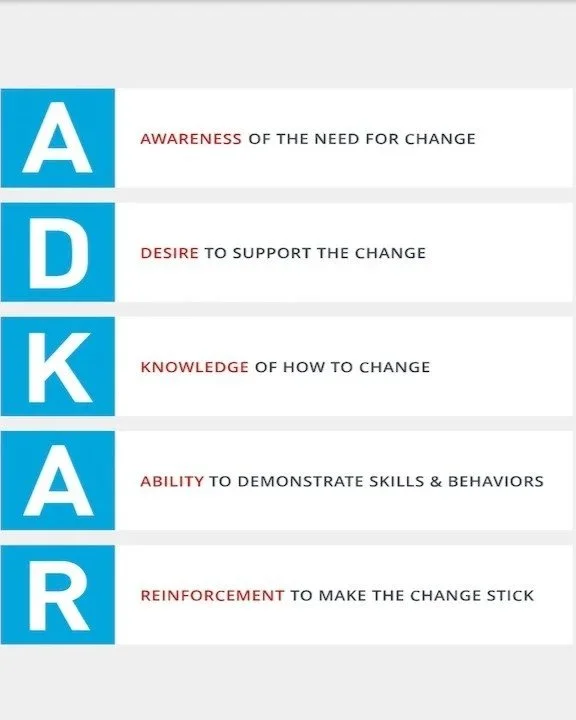
The Prosci® Taking Charge of Change program provides a strong foundation in the principles, frameworks, and tools of change management—rooted in more than two decades of global research. Participants learn to apply the five tenets of change and the ADKAR® Model to real initiatives, ensuring the human side of change is managed as intentionally as the technical side.
“Prosci research shows that projects with excellent change management are 7× more likely to hit their objectives, 5× more likely to stay on or ahead of schedule, and 1.5× more likely to remain on budget. Plus, 59% of teams using a structured approach (like ADKAR) achieve high effectiveness—and that jumps to 76% when they actively track change metrics.”
Proven Methodology – Builds proficiency in using the ADKAR® framework to guide individuals and organizations through change.
Practical Application – Equips you to assess readiness, address barriers, and create actionable change plans for real-world projects.
Research-Driven Tools – Access to Prosci’s industry-leading models, templates, and diagnostic resources to support ongoing initiatives.
Improved Project Outcomes
Projects with excellent change management are 88% likely to meet or exceed objectives, compared to just 13% for those with poor change management. That's a roughly 7× improvement in success likelihood.
Better Schedule Performance
Teams that applied excellent change practices were nearly 5× more likely to complete on or ahead of schedule than those with poor practices.
Budget Control
Projects with excellent change management were about 1.5× more likely to remain on or under budget compared to those with poor change management.
Structured Methodology Yields Results
59% of participants using a structured methodology (like Prosci’s) achieved good or excellent levels of change management effectiveness.
Measuring Change Improves Outcomes
Practitioners who measured compliance and performance had a 76% rate of meeting or exceeding project objectives—versus only 24% among those who didn't track these metrics.